

Waste Circularity in the Philippines


In contrast to the conventional take, make, dispose pattern of a linear economy, the circular economy emphasizes sustainability by reusing, repairing, refurbishing, and recycling goods and materials for as long as possible. It reduces waste, conserves resources, and supports economic resilience across communities.
.jpg)
In the Philippines, the circular economy has gained recognition as a strategic approach to address the country's growing waste management challenges and to support its long-term development goals. The country generates about 61 million kilograms of waste daily, a number that continues to increase with population and economic growth. This rising volume highlights the importance of rethinking how materials are produced, used, and disposed of.
Our Starting Point: The Waste We Create
The Philippines produces a large amount of solid waste every day, reflecting rapid urbanization, industrial expansion, and changing consumption habits. Based on the Philippine Statistics Authority (PSA) report, the country produced around 61 million kilograms of waste daily in 2022, or about 0.40 kilograms per person. Metro Manila remains one of the largest contributors due to its density and commercial activity.
Daily Waste Generation in Kilograms per Region
Data Source: Philippine Statistics Authority, 2024
Visuals By: Juan Miguel De Veyra
In 2024, updated data shows waste generation increasing by roughly 7 percent from 2022 levels, driven by higher consumption and post-pandemic recovery in business activity. This translates to nearly 65 million kilograms of daily waste. Despite improvements in collection systems in some cities, a large portion of waste remains undiverted — neither recycled nor composted — because of gaps in collection and segregation facilities.
Three regions in Luzon—CALABARZON, the National Capital Region, and Central Luzon—generate over five million kilograms of waste each day. These areas account for almost two-thirds of the country’s total, corresponding to more than 40 million Filipinos living in these fast-growing regions.
The Performance Gap: How We’re Managing It
While efforts to improve waste management continue, the gap between waste generation and diversion remains significant. Measuring waste generated versus waste diverted by region reveals that current systems still lean heavily toward disposal rather than recovery. Inconsistent reporting also makes it difficult to assess true progress across localities.
Waste Generated vs Waste Diverted in Kilograms per day
of Cities in NCR
Data Source: Regional DENR-Environmental Management Bureau, 2022-2024
View Chart Guide To focus on a specific data set, click its corresponding item in the legend.
Visuals by: Juan Miguel De Veyra
Local government units continue with segregation, recycling, and other diversion strategies, but challenges persist with inefficiencies in collection, disposal facilities, and landfill capacity. The diversion of waste from landfills through these measures remains critical to reducing environmental and public health impacts in the country.
Pre- vs Post-Pandemic Daily Waste Generation in Kilograms of Cities in NCR
Post-pandemic data show that while total waste volumes slightly decreased in 2023, they rose again in 2024 as economic activity recovered. Metro Manila cities such as Quezon City, Caloocan, and Taguig recorded the largest volumes. However, most of this waste still ends up unrecycled due to limited facilities and poor segregation at the source.
View Chart Guide To focus on a specific data set, click its corresponding item in the legend.
Data Source: Regional DENR-Environmental Management Bureau, 2018-2024
Visuals by: Juan Miguel De Veyra
In addition, the PSA and Environmental Management Bureau (EMB) report that recycling and composting programs cover only a small percentage of total waste produced nationwide.
.jpg)
What about the country’s accumulated hazardous waste?
Hazardous waste is also growing. In 2024, the country generated more than 269 thousand tons of hazardous waste, a 4.3 percent increase from 2023. The EMB operates 172 Treatment, Storage, and Disposal (TSD) facilities across 17 regions, but these remain insufficient to manage hazardous waste from more than 26 million households and 42,000 health facilities nationwide.
Percentage Distribution of Generated Hazardous Waste by Type
View Chart Guide To focus on a specific data set, click its corresponding item in the legend.
Visuals by: Migs De Veyra
Data Source: Department of Environment and Resources - Environmental Management Bureau, 2024
Based on the report of DENR-EMB, oil was the largest at 33.3% or 89.75 thousand tons of the total generated hazardous waste. This was followed by miscellaneous wastes at 19.2% which is equivalent to 51.77 thousand tons and wastes with inorganic chemicals at 14.6% or 39.44 thousand tons. Meanwhile, inks/dyes/pigments/paint/latex/adhesives/organic sludge constitutes 10.5% of total generated hazardous waste. Moreover, categorized by DENR-EMB as other hazardous wastes – containers, waste organic solvent, organic chemicals, wastes with cyanides, stabilized waste, organic chemicals, acid, alkali, and reactive chemical wastes – is equivalent to 22.3% or 60.10 thousand tons of the hazardous waste generated in the past year.
Total Treated Hazardous Waste in Tons by Region
The same report showed that the Philippines treated a total of over 269 thousand tons of hazardous waste from healthcare facilities and medical institutions across the country. Region IV-A contributed a significant share with more than 114 thousand tons of treated hazardous waste, mostly organic chemicals and organic wastes, reflecting its vast urban and industrial activities.
Data Source: Department of Environment and Resources - Environmental Management Bureau, 2024
Visuals by: Migs De Veyra
Regions like NCR and Region III (Central Luzon) also showed considerable amounts of treated hazardous waste, pointing to industrial zones concentrated in these areas. Other regions treated smaller volumes but still played critical roles in hazardous waste management. This reflects continued efforts to employ proper treatment of hazardous waste, which is vital to minimizing environmental and health risks across the country.
Total Treated Hazardous Waste in Tons by Type per Region
Treated hazardous waste across regions include various types, with the largest portions consisting of organic wastes (approximately 28% of the total), organic chemicals (13.6%), and miscellaneous wastes ( 15.9%).
View Chart Guide To focus on a specific data set, click its corresponding item in the legend.
Data Source: Department of Environment and Resources - Environmental Management Bureau, 2024
Visuals by: Migs De Veyra
Other significant waste types included wastes with inorganic chemicals (8.5%), waste organic solvent (11%), alkali wastes (9%), and acid wastes (1.6%). Despite commendable treatment rates across the country, challenges remain in expanding treatment infrastructures and ensuring compliance, especially in smaller regions and among industries with limited resources.
The Infrastructure Gap:
Where the System Falls Short
Generating waste is one thing; managing it is another. The map of Waste Management Facilities by type and by region reveals a critical story. While there is progress, the distribution is uneven. Regions with higher waste generation often have more facilities, but the type of facility is crucial. A heavy reliance on sanitary landfills, without sufficient Material Recovery Facilities (MRFs), composting hubs, and recycling plants, indicates a system that is leaning towards disposal rather than recovery. This infrastructure gap is the primary bottleneck in our circular economy journey.
.jpg)
Materials Recovery Facilities
Republic Act 9003, Solid Waste Management Act of 2000, mandates that each barangay or cluster have an MRF for sorting and processing recyclables and compostable waste. From 6,957 MRFs servicing 7,938 barangays in 2010, the number grew to 13,612 MRFs serving an equal number of barangays by 2018.
Waste Management Facilities by Type per Region
View Chart Guide To focus on a specific data set, click its corresponding item in the legend.
Data Source: Department of Environment and Resources - Environmental Management Bureau, 2024
Visuals by: Migs De Veyra
However, despite this expansion, the number of material recovery facilities trickled to 11,779 in 2022, covering over 42,029 barangays. Alongside these facilities are 290 sanitary landfills and 154 Registered Treatment, Storage, and Disposal (TSD) Facilities servicing over 1,634 cities and municipalities in the country, as reported by the Philippine Statistics Authority.
Regional Distribution of Sanitary Landfills
Regional Distribution of
Materials Recovery Facilities
Data Source: Philippine Statistics Authority, 2022
Visuals By: Vianca Anglo
Region I (Ilocos Region) has the most number of MRFs, with a total of 3,223 as of 2022. Followed by Region VI (Western Visayas) and NCR. SOCCSKSARGEN logged the most notable increase in the number of MRFs recorded over the last three years, with an additional 87 facilities in 2022 from 165 in 2020-2021. Some facilities across regions also ceased operations during and after the pandemic due to lack of funding. Although some opened as well three years after, other facilities no longer opened, such as the 40 MRFs in Ilocos Region.
_edited.jpg)
More Piles but not enough Sanitary Landfills
Sanitary Landfills (SLFs) are categorized under specific guidelines by the Department of Environment and Natural Resources (DENR) through Administrative Order No. 2006-10.
-
Category 1 for LGUs or clusters of local government units with net residual waste of less than or equal to 15 tons per day (TPD).
-
Category 2 for those with greater than 15 TPD but less than or equal to 75 TPD.
-
Category 3 for those with greater than 75 TPD but less than or equal to 200 TPD.
-
Category 4 for waste greater than 200 TPD.
Percentage Distribution of Sanitary Landfills in the Philippines by Category
Data Source: Department of Environment and Resources - Environmental Management Bureau, 2024
47 additional sites were completed in the last two years, making a total of 343 Sanitary Landfills currently operating across the country. 74.9% of 343 or 257 disposal sites are under Category 1, 11.7% or 40 sites are under Category 2, 2.9% or 10 sites belong to Category 3, 5.5% or 19 sites are under Category 4, and 4.9% or 17 landfills are uncategorized.
View Chart Guide To focus on a specific data set, click its corresponding item in the legend.
Visuals by: Juan Miguel De Veyra
Where are these newly constructed landfills located?
Meanwhile, 343 sanitary landfills are currently operating, up from 290 in 2022, but 4 of the country’s 18 major landfill sites have already reached maximum capacity. Most of these are in highly urbanized regions. Although new sites have been established in Cagayan Valley, Bicol, Western Visayas, NCR, and Caraga, they are not enough to offset the rapid increase in waste generation. The imbalance between collection, treatment, and recovery capacity underscores the urgent need for better planning and investment in waste infrastructure.
Regional Breakdown of Constructed Landfills as of 2024
Data Source: Department of Environment and Resources - Environmental Management Bureau, 2024
View Chart Guide To focus on a specific data set, click its corresponding item in the legend.
Visuals by: Migs De Veyra
Our Efforts Today: Building a Circular Future
The Philippines faces chronic challenges—limited waste facilities, weak segregation, and uneven enforcement of existing laws—that continue to strain the system. Yet, the ongoing shift toward circularity also signals progress. The 2022 Extended Producer Responsibility (EPR) Act introduced accountability among producers for the lifecycle of their products and created incentives for recycling and eco-friendly design. Companies such as Coca-Cola Philippines and partners like UN-Habitat have been working with local governments to pilot community-level recycling and recovery programs.
Beyond policy, there is growing public and private momentum to embed circular economy principles into practice. The Department of Science and Technology launched its Science, Technology, and Innovation for Circular Economy (STI4CE) Program in 2024, supporting research and pilot initiatives to encourage innovation in resource management and sustainable production. Across cities, small enterprises are developing models for reuse, refill, and repair that demonstrate how circularity can generate both environmental and economic benefits.


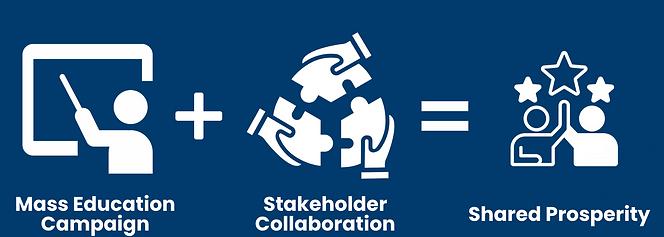
The challenge ahead is to turn these efforts into widespread impact. Collaboration among national agencies, local governments, and industries is key, along with broader public participation in segregation, recycling, and responsible consumption. Achieving a truly circular economy requires aligning infrastructure, education, and governance toward one goal— transforming waste into opportunity and sustainability into everyday practice.
As we continue to magnify our efforts towards a circular economy in the country, members of society need to be reminded of persistent multi-sectoral cooperation and widespread behavioral change as essential complements to existing legislative frameworks.